
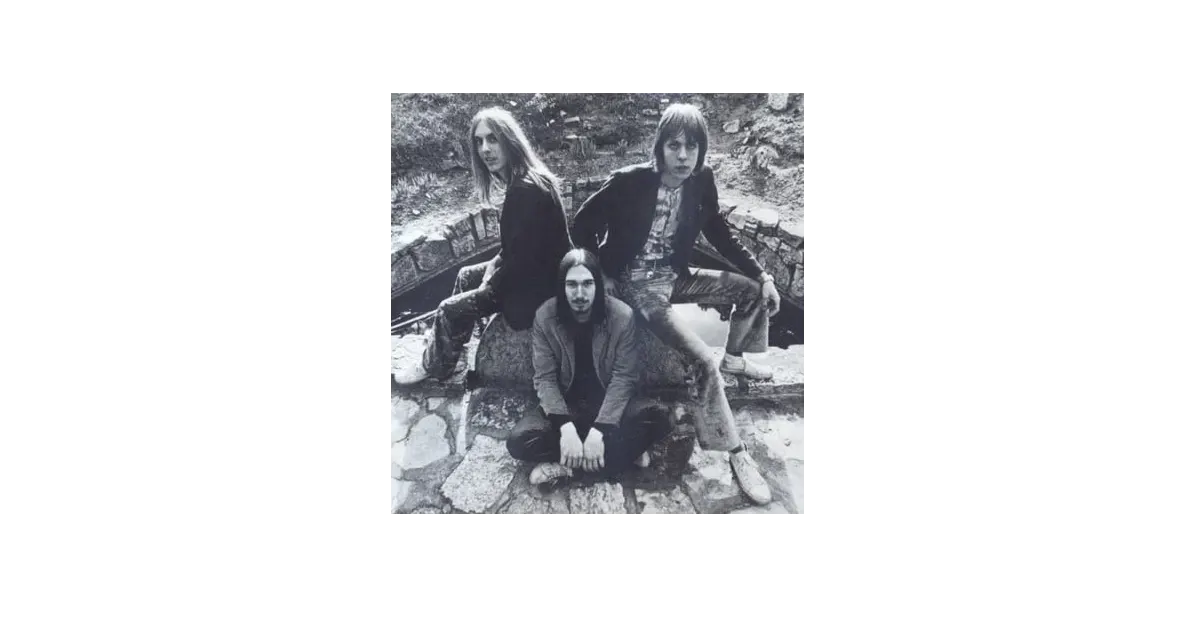
Ash Ra Tempel: Progressive Rock as Cosmic Drift, Collective Trance, and Krautrock Spirituality
Origins and Formation: Progressive Rock Beyond Form
Formed in Berlin in 1970, Ash Ra Tempel occupies a foundational position within the krautrock movement and a parallel, non-Anglo strand of progressive rock history. While British progressive rock sought expansion through composition, virtuosity, and narrative form, Ash Ra Tempel pursued progress through state of being—music as ritual, duration, and altered consciousness.
Emerging from Germany’s post-war avant-garde climate, Ash Ra Tempel rejected both Anglo-American rock orthodoxy and European classical hierarchy. Their ambition was neither entertainment nor architecture, but transformation. Progressive rock, in their hands, becomes a medium for trance, spirituality, and collective immersion.
Musical Identity and Progressive Characteristics
Ash Ra Tempel’s musical identity is defined by extended improvisation, cyclical motion, and psychedelic abstraction. Progressive elements—long-form structure, thematic continuity, and sonic exploration—are central, but they are not articulated through conventional development. Instead, music unfolds through duration and repetition, allowing perception itself to shift.
Rhythm is hypnotic and persistent. Drumming often establishes a steady, motorik-adjacent pulse that resists variation, anchoring the listener in time while other elements drift freely. Bass lines reinforce this grounding, functioning as meditative anchors rather than melodic guides.
Harmonically, Ash Ra Tempel operates in a modal and open-ended space. Guitar lines are fluid, exploratory, and often delay resolution indefinitely. Rather than stating themes, guitars trace energy paths, circling ideas without closure. Keyboards and electronics add texture, atmosphere, and spatial depth rather than harmonic direction.
Vocals are rare and non-traditional. When present, they function as incantation or texture, dissolving language into sound. Meaning is experiential rather than semantic, reinforcing the band’s resistance to narrative or message-driven structure.
Progressive Philosophy: Process as Destination
Ash Ra Tempel’s progressiveness lies in their belief that process itself is the point. Music is not written to arrive somewhere; it exists to remain. Progressive rock, in this philosophy, is not advancement through contrast or complexity, but deepening through sustained attention.
Albums function as ritual spaces. Tracks often occupy entire sides of vinyl, unfolding slowly and without obvious segmentation. Change occurs at the micro level—tone, intensity, density—rather than through formal shifts. Listening becomes an act of participation rather than interpretation.
Crucially, Ash Ra Tempel rejects authorship as control. The band operates collectively, allowing music to emerge organically from interaction rather than from predetermined design.
Ensemble Structure and Collective Dynamics
Ash Ra Tempel functions as a non-hierarchical ensemble. Instruments coexist without dominance, responding to shared momentum rather than leadership. Solos are not featured events; they are continuations of flow, indistinguishable from ensemble texture.
Improvisation is total and continuous. Unlike jazz-based prog fusion, where improvisation occurs within defined frameworks, Ash Ra Tempel allows frameworks to dissolve entirely. Structure emerges temporarily, then disappears.
The studio captures presence rather than construction. Production is raw and spacious, preserving the sense of real-time unfolding rather than sculpted outcome.
Discography Overview: Progressive Rock as Psychedelic Continuum
Ash Ra Tempel (1971)
The debut establishes the band’s core identity immediately. Long, exploratory tracks emphasize trance, repetition, and collective drift. It is a manifesto of process-based progressiveness.
Schwingungen (1972)
A more texturally refined album that deepens the band’s cosmic atmosphere. While still improvisational, it introduces greater control of space and mood.
Seven Up (1973)
A collaborative and more overtly psychedelic work that integrates external influences while maintaining the band’s commitment to altered-state exploration.
Later Directions
Subsequent evolutions—particularly through individual members’ later work—move toward ambient and electronic minimalism, extending Ash Ra Tempel’s core philosophy beyond rock instrumentation.
Signature Track
Amboss
“Amboss” stands as Ash Ra Tempel’s definitive progressive statement. Spanning an entire album side, the piece unfolds as a slow-burning ritual, driven by steady rhythm and exploratory guitar motion. Rather than developing toward climax, it sustains a state—inviting the listener to inhabit time differently.
Its power lies in endurance and immersion. Meaning emerges not through events, but through staying with the sound long enough for perception to shift. It exemplifies Ash Ra Tempel’s vision of progressive rock as consciousness expanded through duration.
Live Performances and Ritual Presence
Ash Ra Tempel’s live performances emphasize continuity and trance. Pieces stretch organically, responding to collective energy rather than audience expectation. Improvisation dominates, and performances feel closer to ceremonies than concerts.
Stage presentation is minimal. Visual spectacle is unnecessary; sound itself is the environment.
Influence, Legacy, and Progressive Rock Context
Within progressive rock history, Ash Ra Tempel represents a cosmic and process-oriented lineage. Their influence extends far beyond prog—into ambient, electronic, drone, and experimental music. Artists who value repetition, texture, and immersion inherit their core principles.
They also challenge narrow definitions of progressive rock. Ash Ra Tempel demonstrates that progressiveness is not a sound, but a method and mindset—one that prioritizes exploration over form.
Conclusion: Why Ash Ra Tempel Still Matters in Progressive Rock
Ash Ra Tempel still matters because they redefine progressiveness as presence sustained through collective trance. Their music advances by dissolving form, hierarchy, and narrative—allowing sound itself to become the subject. By treating progressive rock as ritual rather than composition, they expanded the genre’s philosophical and experiential boundaries.
In a progressive tradition often defined by ambition made visible, Ash Ra Tempel stands apart through ambition made immersive—music that progresses by staying, circling, and trusting that transformation happens not through motion, but through depth.