
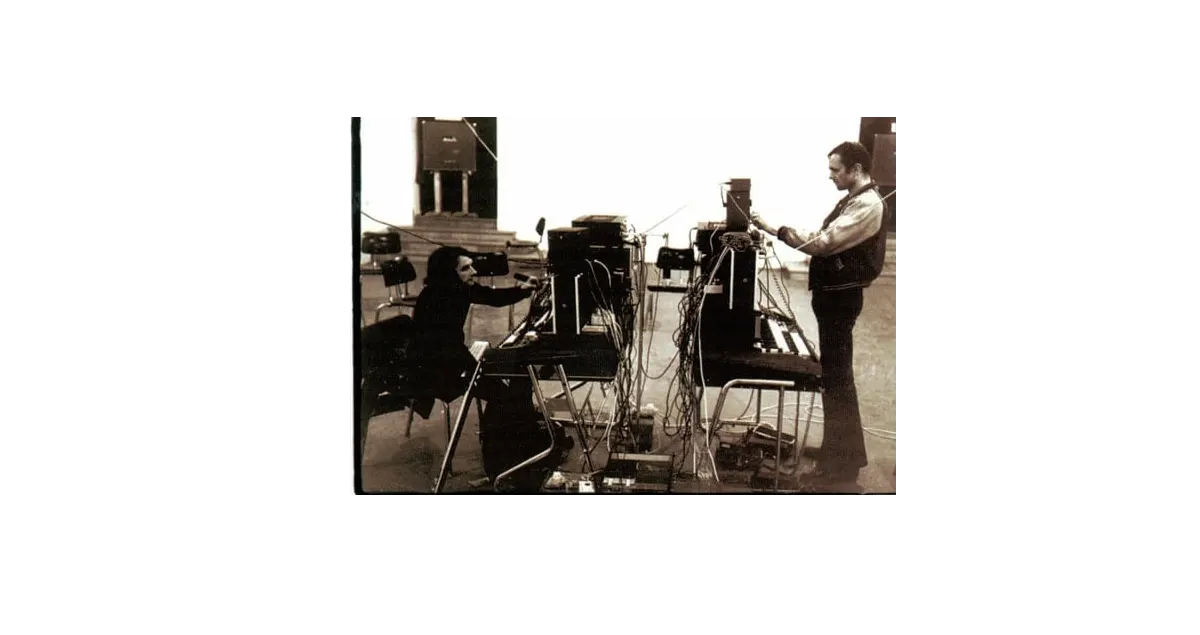
Cluster
Cluster: Electronic Minimalism, Sonic Abstraction, and the Inner Core of Krautrock
Cluster stand among the most radical and influential pioneers of electronic and experimental music. Emerging from Germany’s late-1960s avant-garde underground, Cluster rejected rock conventions almost entirely, replacing rhythm, melody, and song structure with texture, atmosphere, and abstraction. Their work helped redefine what music could be—not as performance or entertainment, but as sound-as-environment.
Unlike many krautrock contemporaries who retained elements of rock rhythm or improvisational jazz, Cluster moved decisively toward electronics and minimalism. Their music operates outside traditional narrative logic, favoring gradual transformation over development, and sensation over direction. In doing so, they laid foundations for ambient, electronic, drone, and experimental music that would fully bloom decades later.
Origins and Formation
Cluster originated in 1969 in Berlin, initially under the name Klopfzeichen. Founding members Hans-Joachim Roedelius and Dieter Moebius emerged from the Zodiak Free Arts Lab scene, a hub for radical experimentation co-founded by Conrad Schnitzler.
Early incarnations of the group operated without traditional instruments. Instead, they manipulated oscillators, tape machines, and homemade electronics, often producing harsh, confrontational noise. These performances rejected musical comfort, challenging listeners’ expectations of coherence and beauty.
When Cluster formally coalesced as a duo, Roedelius and Moebius began refining this chaos into more focused abstraction. Noise gave way to texture, and confrontation evolved into contemplation. This shift marked the beginning of Cluster’s unique voice.
Musical Philosophy and Sonic Identity
Cluster’s music is defined by anti-structure. Rather than organizing sound around rhythm or melody, they emphasize timbre, spatial depth, and slow evolution. Changes occur subtly, often imperceptibly, encouraging deep listening rather than attention-seeking impact.
Key traits of Cluster’s sonic language include:
- Early analog synthesizers and oscillators
- Absence or minimal use of percussion
- Repetition without groove
- Gradual modulation instead of progression
- Emphasis on mood, color, and texture
Their music resists climax. Instead of building toward resolution, Cluster’s compositions exist in a state of suspended motion. This approach invites listeners to inhabit sound rather than follow it.
Importantly, Cluster’s minimalism is not cold. Beneath abstraction lies warmth, curiosity, and human presence—qualities that distinguish them from later, more clinical electronic styles.
From Noise to Atmosphere
Cluster’s early releases are confrontational, bordering on pure noise. However, as the duo evolved, they moved toward a gentler, more introspective sound. This transition did not represent compromise, but refinement.
By stripping away aggression, Cluster revealed emotional subtlety. Electronic tones became softer, harmonic fragments emerged, and silence gained importance. This evolution mirrored a broader philosophical shift within krautrock—from rebellion toward internal exploration.
This period positioned Cluster as proto-ambient artists, long before the term gained widespread usage. Their music suggested that electronics could evoke tranquility, memory, and introspection rather than futurism or spectacle.
Creative Roles and Internal Balance
Hans-Joachim Roedelius and Dieter Moebius functioned as equals. There was no frontman, no hierarchy, and no performative identity. Their collaboration was conversational—sound emerging from shared exploration rather than composition imposed by one vision.
Roedelius often gravitated toward melodic suggestion and warmth, while Moebius favored abstraction and tension. The interplay between these tendencies created balance: emotion without sentimentality, experimentation without chaos.
This internal duality allowed Cluster to evolve organically, adapting their sound across decades without losing coherence.
Position Within Krautrock
While often grouped under the krautrock umbrella, Cluster occupy a distinct internal zone. They are:
- Less rhythmic than motorik-driven bands
- Less improvisational than jazz-oriented acts
- Less rock-oriented than psychedelic groups
Instead, Cluster represent krautrock’s electronic core—music that disengages from rock lineage entirely. Their work aligns more closely with modern electronic composition, sound art, and ambient practice than with rock history.
In this sense, Cluster were not merely part of krautrock; they were a rupture within it, pointing toward a post-rock future.
Albums and Career Highlights
Cluster (1971)
The debut album is raw, abrasive, and uncompromising. Dominated by noise and dissonance, it reflects the band’s origins in anti-music performance art.
Cluster II (1972)
Still challenging, but slightly more focused, Cluster II refines the duo’s approach. Texture and repetition begin to replace pure confrontation.
Zuckerzeit (1974)
A major turning point, Zuckerzeit introduced playful rhythms, warmer tones, and melodic fragments. The album marked Cluster’s transition toward accessible abstraction.
Sowiesoso (1976)
Often regarded as a masterpiece, Sowiesoso embraced calm, repetition, and tonal warmth. It fully realized Cluster’s ambient potential.
Grosses Wasser (1979)
This album expanded the duo’s compositional scope, featuring longer pieces and deeper immersion. It demonstrated how minimal materials could sustain extended attention.
Important Song: Sowiesoso
Sowiesoso stands as Cluster’s most emblematic and defining piece. Appearing on the album of the same name, it encapsulates their mature aesthetic: minimal, warm, and quietly transformative.
The track unfolds slowly, built on repeating electronic figures that subtly shift in tone and emphasis. There is no beat to follow, no melody to resolve—only a gentle process of emergence and decay.
What makes Sowiesoso remarkable is its emotional neutrality. The music does not instruct the listener how to feel. Instead, it creates space for reflection, allowing personal memory and perception to fill the gaps.
The piece anticipates ambient music’s core principles: sound as environment, listening as presence, and repetition as meditation. Its influence is subtle but profound, echoing through decades of electronic and experimental composition.
Sowiesoso is not a song in the traditional sense—it is an experience of duration, patience, and attention.
Collaborations and Extended Influence
Cluster’s openness to collaboration further extended their impact. Their work with other experimental musicians helped bridge krautrock with emerging ambient and electronic scenes.
These collaborations reinforced Cluster’s role as connectors—artists who enabled ideas to circulate rather than dominate. Their influence spread not through popularity, but through conceptual permission.
Legacy and Historical Importance
Cluster’s legacy lies in redefining musical purpose. They demonstrated that music need not entertain, impress, or narrate—it could simply exist.
Their influence can be traced through ambient music, minimalist composition, electronic experimentation, and sound installation art. Artists working in drone, ambient techno, and experimental electronics continue to draw from Cluster’s emphasis on texture and restraint.
Importantly, Cluster proved that radical music could also be gentle—that abstraction need not be hostile.
Conclusion
Cluster stand as architects of musical interiority. By abandoning structure, spectacle, and genre, they created sound worlds that invite presence rather than reaction.
Their music asks for patience, openness, and trust. In return, it offers clarity, stillness, and depth. Cluster did not just expand the boundaries of music—they quietly dissolved them, leaving behind a space where sound and thought can simply coexist.