
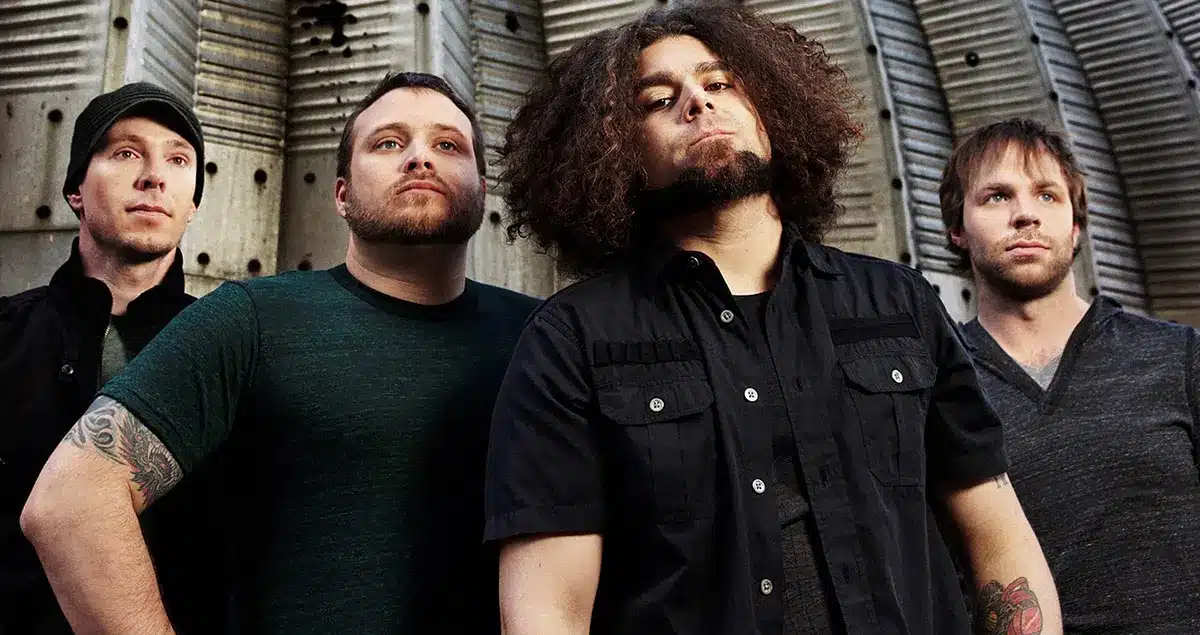
Coheed and Cambria: Progressive Rock as Narrative Engine, Pop-Metal Hybridization, and Conceptual Persistence
Origins and Formation: Progressive Rock Reframed as Serialized Storytelling
Formed in Nyack, New York, in the mid-1990s, Coheed and Cambria represents a rare and durable synthesis within modern progressive rock: long-form conceptual ambition sustained through accessible songcraft and post-hardcore energy. At a time when progressive rock was either retreating into niche virtuosity or dissolving into alternative abstraction, Coheed and Cambria introduced a model built on continuity of narrative rather than escalation of technique.
From the outset, the band positioned progressiveness not as a stylistic marker, but as a storytelling commitment. Albums are chapters; songs are scenes; motifs recur across releases. Progressive rock, in this framework, becomes a serialized medium, closer to episodic literature than to the traditional rock album.
Musical Identity and Progressive Characteristics
Coheed and Cambria’s musical identity is defined by hybridization. Progressive elements—extended structures, recurring themes, rhythmic variation—coexist with pop hooks, punk urgency, and metal-inflected aggression. Complexity is present, but it is filtered through song immediacy rather than technical exhibition.
Rhythm is assertive and direct. While odd meters and tempo changes appear, they are embedded within driving grooves. Drumming emphasizes propulsion and sectional clarity, ensuring that momentum is never sacrificed to intricacy. Bass lines are melodic and forward-moving, reinforcing both harmonic structure and narrative pacing.
Harmonically, the band balances angular guitar work with bright, often anthemic chord progressions. Riffs provide urgency; arpeggiated figures and layered harmonies supply progressive depth. Keyboards and effects appear selectively, enhancing atmosphere without displacing the guitar-centric core. The result is music that feels urgent yet expansive, capable of sustaining long arcs without losing immediacy.
Vocals are a defining feature. Delivered with emotional intensity and a distinctive upper-register timbre, the voice functions as both narrator and character. Lyrics operate on dual levels—specific to the band’s overarching fictional universe, yet emotionally legible even without narrative context. This duality allows accessibility without abandoning conceptual rigor.
Progressive Philosophy: Continuity Over Escalation
Coheed and Cambria’s progressiveness lies in their insistence on continuity as artistic value. Rather than reinventing sound with each release, they evolve within a stable narrative and musical framework. Progress is achieved through deepening context, not stylistic rupture.
Albums are conceived as interlocking systems. Musical motifs, lyrical references, and character perspectives recur across releases, rewarding long-term engagement. Yet individual songs remain concise and hook-driven, ensuring that entry points remain open. Progressive rock becomes cumulative, gaining weight through repetition and return.
Crucially, the band resists the idea that progress requires seriousness of tone. Their music embraces melodrama, intensity, and emotional excess as legitimate expressive tools. Conceptual ambition is paired with visceral delivery, grounding abstraction in feeling.
Ensemble Structure and Creative Dynamics
Coheed and Cambria operates as a song-centered but narrative-driven ensemble. Individual musicianship is strong, but always subordinate to structure and story. Solos are present but controlled, functioning as expressive peaks rather than technical showcases.
Interaction emphasizes alignment. Instruments lock tightly to support vocal delivery and narrative pacing. Extended compositions unfold through sectional contrast rather than improvisational expansion, reinforcing the sense of authored design.
Production balances polish and aggression. Clarity ensures that dense arrangements remain legible, while dynamic range preserves emotional impact. The studio serves narrative coherence rather than sonic experimentation.
Discography Overview: Progressive Rock as Serialized Canon
The Second Stage Turbine Blade (2002)
The debut introduces the band’s narrative universe and core musical language. Urgency, melody, and conceptual intent coexist naturally.
In Keeping Secrets of Silent Earth: 3 (2003)
A breakthrough release that expands both scope and confidence. Longer forms and thematic depth solidify the band’s progressive identity.
Good Apollo, I’m Burning Star IV, Volume One (2005)
A pivotal album that intensifies emotional and conceptual stakes, integrating self-reflexive narrative elements with expanded musical ambition.
No World for Tomorrow (2007)
A more direct and aggressive continuation that maintains narrative momentum while emphasizing immediacy.
Later Works
Subsequent albums continue developing the overarching story while refining production and compositional balance, demonstrating the viability of long-term conceptual commitment in a modern context.
Signature Track
In Keeping Secrets of Silent Earth: 3
“In Keeping Secrets of Silent Earth: 3” stands as Coheed and Cambria’s definitive progressive statement. Built around a gradual build from restrained introduction to communal climax, the track integrates anthemic melody, narrative intensity, and structural expansion.
Sections unfold logically, guided by emotional escalation rather than technical display. Repetition becomes ritual; the closing chant transforms narrative into shared experience. The piece exemplifies the band’s philosophy: progressive rock as story-driven momentum sustained through songcraft.
Live Performances and Communal Narrative
Coheed and Cambria’s live performances emphasize collective immersion. Extended tracks become participatory events, with audiences engaging in refrains that reinforce narrative continuity. While arrangements remain faithful, emotional peaks are amplified through communal energy rather than improvisation.
Stage presentation supports story without theatrical excess. The focus remains on delivery, momentum, and connection—music as shared chapter rather than spectacle.
Influence, Legacy, and Progressive Rock Context
Within the progressive rock continuum, Coheed and Cambria occupies a hybrid frontier. They bridge progressive ambition and alternative accessibility, demonstrating that long-form narrative can survive within modern rock ecosystems. Their influence is evident among bands that pursue concept-driven work without abandoning hooks or immediacy.
They also challenge restrictive definitions of progressiveness, proving that continuity, not complexity alone, can be the engine of progress.
Conclusion: Why Coheed and Cambria Still Matters in Progressive Rock
Coheed and Cambria still matters because they redefine progressiveness as narrative persistence sustained through accessible form. Their music advances by telling a story over time—building meaning cumulatively rather than through escalation of technique. By embedding progressive structure within emotionally direct songs, they expanded the genre’s relevance for a new generation.
In a progressive tradition often divided between abstraction and virtuosity, Coheed and Cambria stands apart through commitment—to story, to continuity, and to the belief that progressive rock can still unfold chapter by chapter, without losing urgency, clarity, or heart.