
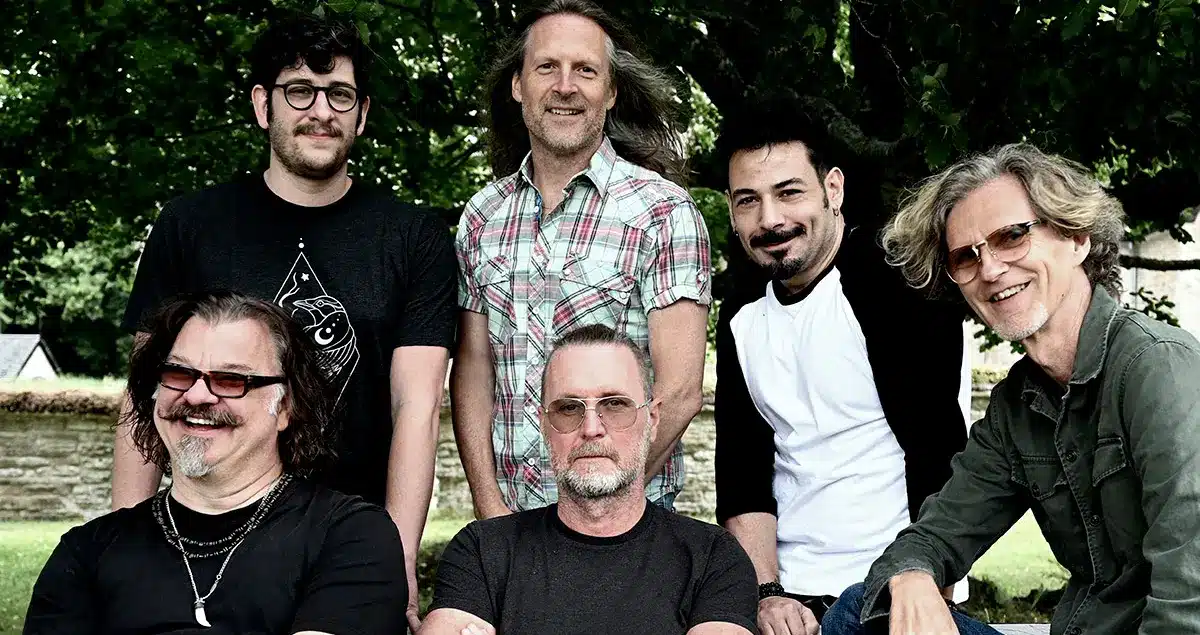
The Flower Kings: Progressive Rock as Abundance, Spiritual Inquiry, and Long-Form Generosity
Origins and Formation: Progressive Rock Reclaimed as Continuum
Formed in Uppsala, Sweden, in 1994, The Flower Kings emerged at a moment when progressive rock’s legacy felt fragmented—either embalmed in nostalgia or atomized into technical extremity. The Flower Kings proposed a third way: progressive rock as continuity, a living tradition that could absorb the past without reenacting it and expand forward without denying melody, warmth, or human scale.
Their founding vision reframed progressiveness not as rupture, but as abundance. Where many contemporary acts pursued precision or austerity, The Flower Kings embraced length, density, and generosity—extended compositions, overflowing albums, and a belief that musical ideas gain meaning through time spent rather than efficiency achieved. This orientation positioned them as custodians and renovators of symphonic prog’s core values in a modern context.
Musical Identity and Progressive Characteristics
The Flower Kings’ musical identity is defined by long-form development, melodic optimism, and ensemble breadth. Progressive elements—multi-part suites, shifting meters, thematic recurrence—are central, yet they are delivered with openness rather than severity. Complexity is present, but it is welcoming, inviting immersion instead of demanding submission.
Rhythm functions as a stabilizing current across extended arcs. Time signatures change frequently, but transitions are fluid, guided by melodic logic rather than rhythmic display. Drumming emphasizes continuity and lift, sustaining momentum across long durations. Bass lines are active and melodic, often shaping transitions and reinforcing thematic cohesion.
Harmonically, the band operates within a rich symphonic palette. Keyboards establish expansive harmonic fields—organ, synthesizer, and piano layering warmth and color—while guitars alternate between lyrical phrasing and textural support. Solos emerge naturally from the fabric, expressive yet concise, reinforcing narrative flow rather than interrupting it.
Vocals are integrated rather than dominant. Lyrics tend toward spiritual reflection, human connection, and cosmic perspective, delivered with sincerity and restraint. The voice functions as a unifying element within the ensemble, supporting the music’s sense of uplift without imposing theatrical authority.
Progressive Philosophy: More Is Meaning
The Flower Kings’ progressiveness lies in their conviction that meaning accrues through duration and return. Rather than compressing ideas into optimized forms, they allow themes to recur, evolve, and coexist. Repetition is not redundancy; it is recognition. Long tracks are not tests of endurance, but invitations to inhabit a musical landscape.
Albums are conceived as worlds rather than statements. Track sequencing favors flow over contrast, encouraging holistic listening. Even outside explicit concept frameworks, records maintain tonal and thematic coherence—progressive rock as environmental design.
Crucially, the band resists irony. Their optimism is deliberate and philosophical, proposing that progressive music can affirm curiosity, empathy, and spiritual searching without naivety. Progress is framed as expansion of awareness, not escalation of technique.
Ensemble Structure and Creative Dynamics
The Flower Kings operate as a broad, collaborative ensemble. While leadership and compositional direction are clear, the music foregrounds collective interaction. Instrumental roles are complementary; no single voice dominates for long.
Improvisation exists within defined boundaries. Solos are expressive but contextual, emerging to clarify emotion or transition rather than to assert virtuosity. This discipline ensures that extended compositions retain coherence across their length.
Production supports breadth rather than polish. Arrangements are layered yet breathable, preserving detail without sacrificing warmth—an aesthetic choice aligned with the band’s philosophy of generosity.
Discography Overview: Progressive Rock as Ongoing Journey
Back in the World of Adventures (1995)
The debut establishes the band’s core ethos immediately: long forms, melodic confidence, and symphonic scope. It announces continuity with classic prog while asserting a contemporary voice.
Stardust We Are (1997)
A landmark double album that embodies the band’s belief in abundance. Its extended suites and thematic breadth define The Flower Kings’ identity and ambition.
Flower Power (1999)
Expansive and exploratory, this album pushes duration and density further, reinforcing the idea of progressive rock as immersive environment.
The Rainmaker (2001)
A more focused release that balances accessibility with long-form thinking, demonstrating editorial control without abandoning scope.
Unfold the Future (2002)
A mature synthesis of melody, structure, and thematic continuity. Its cohesion affirms the band’s long-arc compositional confidence.
Later Works
Subsequent albums continue refining the band’s language—sometimes tightening form, sometimes expanding again—while maintaining the core values of warmth, duration, and spiritual inquiry.
Signature Track
Stardust We Are
“Stardust We Are” stands as The Flower Kings’ definitive progressive statement. Structured as an extended suite, the piece unfolds through gentle evolution rather than dramatic rupture. Themes recur with variation; transitions are fluid; momentum is sustained through melodic lift and rhythmic steadiness.
Rather than building toward a singular climax, the track maintains a sense of continuous ascent, reinforcing the band’s belief that progressive rock can be expansive without confrontation. Its emotional power derives from patience, recurrence, and openness—progress as lived experience over time.
Live Performances and Communal Flow
The Flower Kings’ live performances emphasize continuity and connection. Extended pieces are delivered with warmth and precision, preserving internal logic while allowing subtle variation. The focus is on shared immersion rather than spectacle.
Stage presentation is functional and inclusive, directing attention toward ensemble interplay and musical flow. Performances feel communal, aligning with the band’s humanistic ethos.
Influence, Legacy, and Progressive Rock Context
Within the modern progressive rock landscape, The Flower Kings occupy a pivotal role as renewers of symphonic tradition. They demonstrated that progressive rock could return to long-form generosity without nostalgia, affirming melody, warmth, and spiritual inquiry in a contemporary setting.
Their influence is evident among bands that value album cohesion, extended duration, and emotional openness—artists who see progressive rock as continuum rather than museum.
Conclusion: Why The Flower Kings Still Matter in Progressive Rock
The Flower Kings still matter because they redefine progressiveness as abundance sustained by intent. Their music advances through generosity—of time, melody, and ideas—rejecting austerity and irony in favor of openness and connection. By treating progressive rock as a living environment where themes recur, evolve, and coexist, they preserved the genre’s expansive ambition while renewing its human core.
In a progressive tradition often polarized between excess and restraint, The Flower Kings stand apart through confidence in more—a belief that progress can mean widening the field, staying longer with ideas, and trusting music to reveal meaning through shared time.